International relations and strategic balancing
Vietnam’s external environment is complex but not currently crisis-level. Key issues include maritime disputes in the South China Sea, economic dependence on major powers, and the need to balance relations with China, the United States, and other regional partners. The armed forces and their political leadership play a central role in shaping defense policy and strategic signaling, and high-ranking military-political figures like Luong Cuong embody the emphasis on safeguarding national sovereignty while avoiding open confrontation. Hanoi pursues a multi-vector foreign policy—diversifying security partnerships, deepening economic ties, and maintaining a non-aligned posture. While there are periodic spikes in nationalist sentiment over maritime issues and concerns about economic and technological dependence, the leadership has so far managed to prevent these from escalating into acute diplomatic or military crises, leading to a moderate rather than high tension assessment.
Media environment and information control
Vietnam’s media environment is tightly controlled: all formal media outlets are state-linked, and online speech is monitored and regulated. Independent political journalism and organized opposition media operate in a constrained and often risky space, with arrests and harassment of activists, bloggers, and independent journalists. The security apparatus—within which the army and its political agencies, historically overseen by figures like Luong Cuong, play an important ideological role—views information control as essential to regime security and social order. At the same time, the expansion of social media has diversified information sources and allowed more open discussion of corruption, local governance failures, and social issues, though users face legal and informal pressures. Tensions are thus moderate: control is effective enough to prevent systemic crisis but not so complete as to eliminate friction between authorities and more critical segments of society.
Political pluralism, polarization, and elite contestation
Formal political polarization in the sense of competing mass parties or ideological blocs is low, as the CPV monopolizes organized political life and allows no legal opposition. However, there is some degree of intra-elite competition over leadership positions, policy orientation, and control of key institutions. Luong Cuong’s rise within the military-political hierarchy reflects the weight given to security and ideological reliability in elite power-balancing, especially amid recent anti-corruption purges and leadership reshuffles. Publicly visible polarization is muted because debate is tightly managed, but internally there are differing views on economic reform pace, foreign policy, and the handling of corruption and factionalism. The intensity score recognizes these internal frictions without equating them with open, societal polarization seen in multiparty systems.
Social stability and regime cohesion
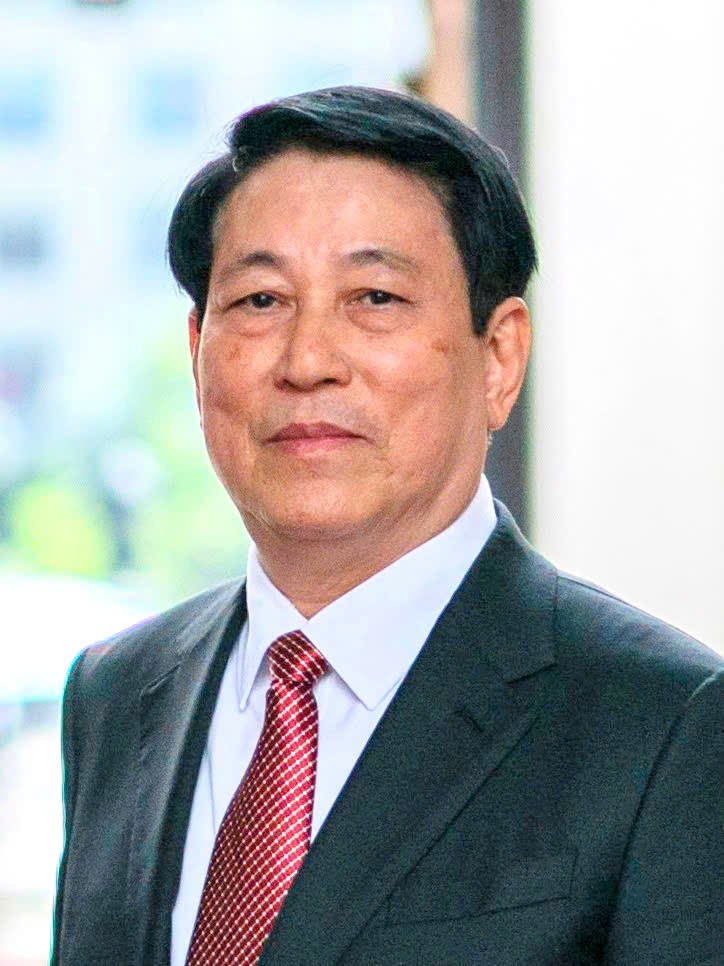
Vietnam is politically stable under the one-party leadership of the Communist Party of Vietnam (CPV), and elite cohesion remains relatively strong. As Director of the General Department of Politics of the Vietnam People’s Army and later State President, Luong Cuong has been closely associated with the party–military nexus that underpins this stability. His career reflects the priority given to ideological discipline, loyalty to the party, and managing the military as a core pillar of regime security. While there are underlying socioeconomic grievances and sporadic localized protests (e.g., land disputes, environmental concerns), these have not coalesced into large-scale, sustained unrest. The political system retains significant capacity to pre-empt and contain dissent through a combination of patronage, co-optation, and coercive tools, in which the political-military apparatus that Luong represents plays a central role.
Social tensions and socioeconomic inequalities
Rapid economic growth and integration into global markets have raised living standards, but they have also generated distributional tensions, regional disparities, and localized conflicts—particularly concerning land rights, environmental degradation, labor conditions, and rural–urban inequality. Protests are usually localized, issue-specific, and short-lived, often addressed through a mix of concessions and coercion. The state, including the military and its political bodies linked to leaders such as Luong Cuong, emphasizes social harmony and national unity narratives to manage these pressures. The absence of broad-based, organized opposition and the presence of relatively effective administrative structures help keep tensions below crisis levels, yet underlying grievances remain structurally embedded, justifying a mild-to-moderate intensity rating.
Trust in institutions and anti-corruption politics
Surveys and anecdotal evidence suggest that trust in central institutions—especially the CPV, government, and armed forces—remains relatively robust compared to many countries at a similar income level, though it is uneven and contingent on performance. The ongoing anti-corruption campaign (often associated with the ‘blazing furnace’ policy) has targeted high-ranking officials and business figures, which may both bolster and test public trust: it signals willingness to discipline elites but also reveals the extent of entrenched corruption. Luong Cuong’s background in political work within the military positions him as a representative of the institutional push to maintain party discipline and ideological loyalty, which is framed domestically as part of strengthening institutional integrity. Nonetheless, persistent concerns over rent-seeking, opaque decision-making, and limited channels for citizens to hold leaders accountable keep tensions in the mild-to-moderate range.