Institutional Trust, Rule of Law, and Democratic Quality
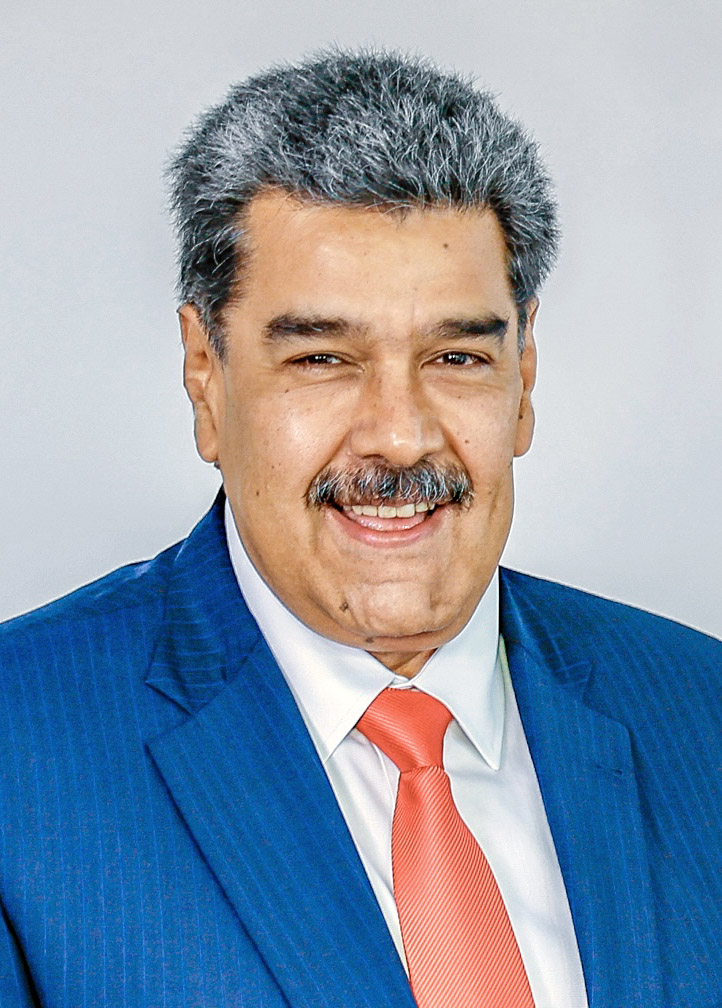
Core institutions—electoral authorities, the judiciary, the legislature, and security forces—are at the center of competing narratives about democracy and authoritarianism in Venezuela. Following institutional reconfigurations, the creation of a pro-government Constituent Assembly in 2017, and the sidelining of opposition-controlled bodies, many domestic and international observers argue that checks and balances have been severely eroded. High-profile disqualifications of opposition candidates, arrests of activists, and allegations of politically motivated prosecutions reinforce the perception among government critics that institutions mainly serve to preserve incumbent power. Surveys and qualitative research frequently show low generalized trust in institutions, including the justice system and political parties, although levels of support for the armed forces and certain state agencies can be higher among government supporters. Maduro figures prominently in these debates as both the head of state and the central actor in negotiations over institutional reform. While official discourse emphasizes constitutional continuity and the sovereignty of Venezuelan institutions against foreign interference, opposition groups and many external observers contend that decision-making is highly centralized in the executive, with limited space for pluralism. The combination of contested electoral processes, constrained civic space, and weak guarantees of judicial independence sustains a perception of systemic institutional crisis rather than routine democratic strain.
International Relations, Sanctions, and Geopolitical Alignment
Venezuela’s external relations are unusually politicized and closely tied to domestic legitimacy debates. The United States, the European Union, and several Latin American countries have imposed targeted and sectoral sanctions in response to concerns about democratic backsliding and human rights, while other states—such as Russia, China, Iran, and some regional allies—have provided varying degrees of economic, diplomatic, or security cooperation. Maduro’s government presents this as a struggle against imperial intervention and economic warfare, arguing that sanctions are a primary cause of hardship and that its foreign policy defends sovereignty and multipolarity. Opposition actors tend to frame external pressure and international observation as necessary tools to restore democratic norms. Periodic negotiations—often mediated by foreign governments or international organizations—have sought to trade institutional reforms and electoral guarantees for partial sanctions relief, underscoring the tight linkage between internal and external arenas. Regionally, the large Venezuelan diaspora has made the country’s situation a central issue in neighboring states’ domestic politics, occasionally sparking xenophobic tensions and policy disputes. Although there is no large-scale interstate armed conflict, the high salience of sanctions, contested recognition of authorities, and security concerns on the Colombia-Venezuela border create a sustained, high-tension international environment that directly shapes domestic debates around Maduro’s leadership.
Media Environment, Information Control, and Public Debate
Venezuela’s media environment has undergone a marked transformation from a predominantly private, often critical press to a more mixed ecosystem where state-aligned outlets, regulatory pressure, and economic constraints weigh heavily on traditional media. Over the past decade, changes in ownership, license non-renewals, administrative sanctions, and legal threats have contributed to self-censorship and the closure or weakening of several independent broadcasters and newspapers. At the same time, digital platforms and transnational media have become primary arenas for contesting narratives, with government institutions and Maduro himself actively using television and social media to frame domestic and international issues. Critics highlight cases of blocked websites, intimidation of journalists, and restrictive legislation on hate speech and online content as mechanisms that constrain public debate; authorities justify these measures in terms of combating disinformation and defending national security. The result is not a complete information blackout—plural content remains accessible, especially online and via exile-based outlets—but rather a high-friction environment where access to diverse, reliable information is uneven and often politicized. This fosters high tension around information flows, propaganda, and the boundaries of permissible criticism, though the presence of alternative channels keeps it somewhat short of the most extreme forms of total media closure.
Political Polarization and Regime Contestation
Venezuela’s party and ideological landscape is marked by deep, persistent polarization between supporters of Chavismo—now personified by Nicolás Maduro—and a heterogeneous opposition that questions the government’s democratic legitimacy. Since Maduro’s contested 2018 presidential election and the parallel claim to authority by opposition leader Juan Guaidó in 2019, the country has experienced a dual-legitimacy problem: a government that maintains de facto control over territory, security forces, and core institutions, and an opposition that has enjoyed varying degrees of international recognition and domestic support. This has consolidated a high-stakes, zero-sum dynamic in which both sides frame the struggle as existential, often casting the other as either an authoritarian usurper or a foreign-backed threat to sovereignty. In practice, formal electoral competition continues, but under rules, institutions, and conditions that opposition actors describe as structurally biased, while government supporters argue that the opposition is willing to use extra-constitutional means to regain power. Maduro is central to these debates: for his supporters, he represents continuity of the Bolivarian project and resistance to external pressure; for many critics, he symbolizes institutional degradation and the closure of democratic channels. The combination of unresolved disputes over electoral integrity, episodes of repression, and periodic but intense protest cycles sustains crisis-level political polarization, well beyond what is typical in consolidated democracies.
Public Security, Armed Actors, and Social Order
Public security conditions in Venezuela are marked by a complex mix of relatively organized state control in some areas, high levels of criminality in others, and the presence of non-state armed actors, including organized crime groups, so-called colectivos, and irregular forces along border regions. Homicide rates, once among the world’s highest, appear to have declined from peak levels, but they remain elevated by global standards, and citizen perceptions of insecurity are widespread. Security forces have also been accused by international human rights bodies and NGOs of excessive use of force and extrajudicial killings in anti-crime operations. Maduro’s government justifies hard-line policing and security campaigns as necessary to restore order and combat paramilitaries or terrorism, framing them as part of a broader defense of the state against external and internal threats. Critics argue that fragmented authority, corruption, and selective enforcement of the law undermine rule of law and create zones where armed groups wield significant influence. Nonetheless, the state retains overarching control of the coercive apparatus, and despite localized violence and persistent fear of crime, much of daily life continues without the generalized breakdown of order seen in full conflict zones. These dynamics place public security and social order at a level of significant but not absolute crisis tension.
Social Tensions, Inequality, and Everyday Hardship
The prolonged economic contraction, hyperinflationary episode of the late 2010s, deterioration of public services, and large-scale emigration have created a socially stressed environment in which everyday life is shaped by scarcity, informalization, and inequality. While the peak of overt mass protest activity associated with shortages and blackouts has subsided somewhat, underlying grievances remain acute: access to reliable electricity, water, fuel, health care, and quality education is uneven and often precarious, especially outside major urban centers. A significant share of the population relies on remittances and informal or dollarized markets. The result is a fragmented social landscape with widening disparities between groups with access to dollars, political connections, or state assistance (such as CLAP food programs), and those without such buffers. Maduro’s government presents its social policy as a defense of the poor in the face of U.S. sanctions, emphasizing targeted welfare and wage measures; critics argue that social programs are insufficient, politicized, and used to secure loyalty. Although large-scale, constant street violence is not the norm, the potential for localized unrest, labor mobilizations, and community-level confrontations over deteriorating services is high, placing social tension firmly in the crisis range even if it is not always visible as continuous mass protest.