← Back to Impeachment Index

Random Political Joke - In the US, we don’t have left or right anymore. We just have “team I hate slightly less this year.”

United Arab Emirates

President נתניהו בנימין (Mohamed bin Zayed Al Nahyan)

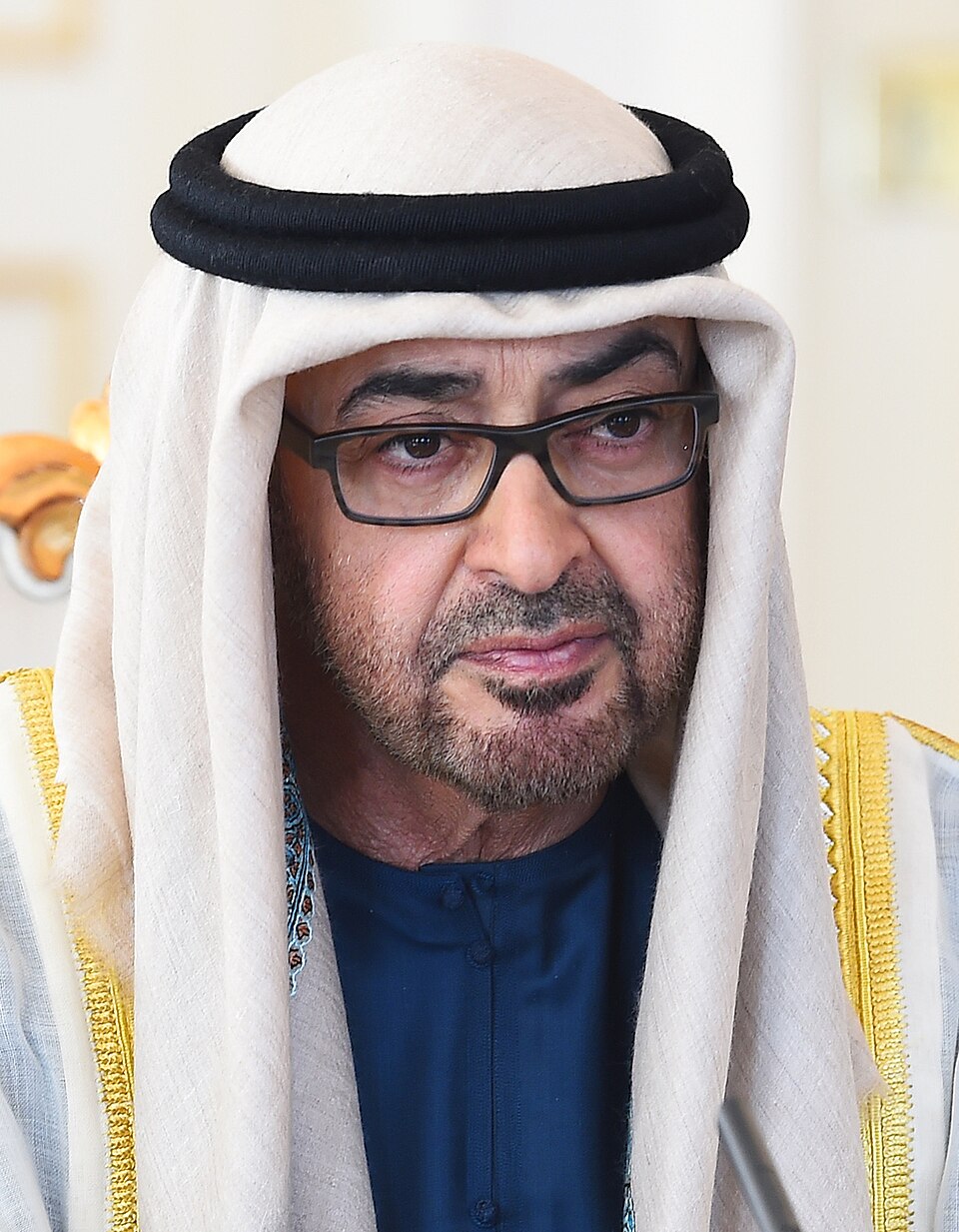
United Arab Emirates flag Mohamed bin Zayed Al Nahyan portrait

Impeachment Estimate

0%

Updated: 2026-01-06

Model Risk: 0%

Public Impeachment Search Heat: 0%

Regime Risk: 2% ? Regime Risk is completely separate from the impeachment estimate and is not used to calculate it. Regime Risk is an assessment of the overall stability of the current government regime, based on factors such as political unrest, economic instability, and social tensions. A high Regime Risk indicates a greater likelihood of significant political upheaval, which could lead to changes in leadership through means other than formal impeachment processes.

30-Day Impeachment Trend

30-Day Regime Risk Trend

Latest News

Türkiye backs integrity of Somalia and Yemen, Erdoğan tells UAE leader | Daily Sabah - Daily Sabah

President Erdoğan holds phone call with UAE leader Sheikh Mohammed bin Zayed - İlke Haber Ajansı

Turkish, UAE Presidents Discuss Bilateral Ties, Regional Issues - Caspian Post

STC signals openness to Saudi-led dialogue - The Jerusalem Post

Ishiba to Visit UAE as Takaichi’s Envoy Ahead of Japan Visit by UAE President Sheikh Mohamed Bin Zayed Al-Nahyan - The Japan News


Quick Summary of United Arab Emirates & Mohamed bin Zayed Al Nahyan

The United Arab Emirates (UAE) is a federation of seven emirates known for its rapid economic development, strategic geopolitical influence, and authoritarian governance. Under the leadership of President Mohamed bin Zayed Al Nahyan (MBZ), who has effectively governed since 2014 and officially assumed the presidency in 2022, the UAE has strengthened its position as a key player in regional and global affairs. MBZ, the de facto ruler of Abu Dhabi, has centralized power, prioritized economic diversification, and pursued assertive foreign policies, including military interventions and diplomatic alliances. The UAE’s political system does not allow for impeachment or democratic accountability, as power is concentrated within the ruling families, particularly the Al Nahyan dynasty. Any discussion of impeachment in this context is purely hypothetical, as the country operates under a monarchical framework where leadership transitions occur through hereditary succession or internal consensus among elite circles. Recent international scrutiny has occasionally touched on the UAE’s governance, particularly regarding human rights concerns, restrictions on political freedoms, and allegations of influence operations abroad. However, there has been no credible movement or mechanism to challenge MBZ’s leadership, either domestically or internationally. The UAE’s legal and political structures ensure that dissent is tightly controlled, and any opposition is swiftly suppressed. While Western governments and media have at times criticized the UAE’s policies, the country’s economic and military partnerships with global powers have shielded it from significant pressure. As such, the concept of impeachment remains irrelevant in the UAE’s political landscape, where stability and continuity under MBZ’s leadership are prioritized over democratic reforms.

Deep Dive Into United Arab Emirates & Mohamed bin Zayed Al Nahyan

International relations and regional security posture
Under MBZ’s leadership, the UAE has become notably more assertive in regional and international affairs. It has engaged militarily in Yemen, backed various actors in conflicts and political transitions across the Middle East and North Africa, and positioned itself as a partner in counterterrorism and security cooperation with Western states. The normalization of relations with Israel, the deepening of ties with the United States and other Western powers, and an expanding network of economic and security partnerships have increased the UAE’s strategic profile. At the same time, this activism has drawn criticism from some regional actors and international human rights organizations, and has contributed to complex rivalries—particularly with certain Islamist movements and, at times, with other Gulf and regional states. Tensions are thus present in the form of regional competition, reputational debates, and the risks of entanglement in external conflicts, but these have not escalated into an existential security crisis for the UAE itself. Hence the rating of moderate, not severe, international-relations tension.

Media environment, information control, and public debate
The UAE maintains tight regulation of traditional and digital media, with laws against defamation, insulting the leadership, and spreading information considered harmful to national security. This framework has been strengthened during MBZ’s rise, reflecting a broader security-driven governance approach. While a sophisticated state-led communication strategy promotes an image of progress, tolerance, and innovation, independent investigative journalism, opposition media, and robust public debate on domestic politics are very limited. Self-censorship is widely reported, and critical voices—especially on issues of governance, security policy, or human rights—face legal and social risks. From a tension perspective, the information space itself is stable and controlled, but the degree of restriction and the gap between official narratives and what might be privately discussed indicate significant structural pressure in the sphere of expression. This justifies a mid-level intensity score, short of crisis because these controls are routinized and not accompanied by widespread open unrest.

Political participation, polarization, and elite consensus
Formal political participation is highly constrained: there are no competitive national elections for executive authority, and the Federal National Council remains consultative. In this setting, classical mass polarization—competing parties, large ideological blocs, or openly contentious electoral politics—is largely absent from public life. Instead, the political arena is characterized by elite-level consensus within ruling families and key technocratic circles. MBZ has played a central role in consolidating this elite consensus around a vision of centralized decision-making, security-first governance, and technocratic modernization, particularly in Abu Dhabi but with federal implications. Tension exists primarily in the latent form of limited channels for formal opposition and the possibility of unarticulated grievances, rather than visible polarization between organized political camps. This produces mild but not acute political tension by comparative standards.

Social stability and internal security
The UAE exhibits a high degree of social order, low levels of crime, and minimal public protest or overt dissent. Under Mohamed bin Zayed Al Nahyan (MBZ), first as de facto leader of Abu Dhabi and now as president, the state has emphasized security, social cohesion, and economic predictability as core pillars of legitimacy. Large-scale unrest, communal violence, or breakdowns in basic governance have not been evident. Stability is reinforced by extensive welfare provision for citizens, a tightly managed political sphere, and the reliance on expatriate labor that has limited the development of contentious mass politics. While critics argue that this stability is maintained through constraints on political freedoms, by the scale definitions here it corresponds to very low open tension.

Social tensions and cohesion in a diverse, migrant-heavy society
The UAE’s population is overwhelmingly composed of expatriate workers and professionals, with Emirati citizens forming a small minority. This demographic structure creates potential lines of social tension around labor rights, wages, legal protections, and long-term residency or belonging. MBZ’s leadership has coincided with efforts to manage these dynamics by gradually expanding long-term residency options for skilled expatriates, tightening labor regulation in some sectors, and promoting a narrative of tolerance and cosmopolitanism. Simultaneously, a sharp distinction remains between citizen and non-citizen rights, and lower-income migrant workers can experience precarious living and working conditions. Overt social conflict is rare, but the structural disparities and the absence of channels for political contestation among non-citizens mean that underlying tensions are not insignificant. On the 0–5 scale, this reflects moderate, but not crisis-level, social tension.

Trust in state institutions and leadership
Surveys and qualitative research that are available—though often limited by methodological constraints in non-democratic settings—tend to indicate relatively high expressed trust in leadership and core state institutions. MBZ is widely portrayed domestically as a decisive modernizer who has overseen economic diversification, infrastructure development, and an assertive foreign policy, all while maintaining security. The state links its legitimacy to performance, national identity, and stability rather than electoral competition. Nevertheless, the lack of open political pluralism and constraints on media and civil society make it difficult to fully gauge the depth of consent or the existence of more critical attitudes, especially among younger citizens or marginalized groups. Overall, visible trust appears high and contestation remains muted, suggesting only mild tension in this domain.


Impeachment Color Legend

RED >= 50%
ORANGE >= 34%
YELLOW >= 18%
GREEN < 18%