Domestic Stability and Public Order
Despite pronounced political and social tensions, everyday public order in Turkey is generally maintained. Large-scale violence is sporadic and typically linked to specific triggers—such as terrorist attacks, regional military developments, or contentious protest events—rather than continuous nationwide unrest. The state security apparatus is robust and highly present, and Erdogan’s government emphasizes stability and national security as core priorities. The memory of the 2016 coup attempt and subsequent emergency measures still shapes perceptions of vulnerability and the state’s readiness to act decisively. Protests do occur, but they are often tightly managed or restricted by authorities, which reduces the frequency of uncontrolled large-scale confrontations but raises concerns among critics about freedom of assembly. Overall, the environment is not one of chronic, systemic violence; instead, it combines a relatively stable everyday order with underlying grievances that can flare up under specific conditions.
International Relations and Regional Posture
Turkey’s international environment is complex but not at general crisis level. Under Erdogan, foreign policy has combined NATO membership and continued—though often strained—engagement with Western partners, with a more assertive and autonomous regional posture in the Eastern Mediterranean, the Middle East, the South Caucasus, and North Africa. Intermittent tensions with the European Union, the United States, and neighboring states have centered on issues such as maritime boundaries, defense procurement, human rights concerns, and policy toward Syria and Kurdish groups. At the same time, Turkey remains integrated into key security and economic frameworks, participates in alliance decision-making, and plays a significant role in migration management and regional diplomacy. Episodes of heightened friction and rhetoric do occur, but they are balanced by ongoing pragmatic cooperation. The overall level of external tension is therefore moderate: noticeable and sometimes sharp, yet contained below the threshold of sustained, large-scale interstate conflict.
Media Environment and Freedom of Expression
The media environment is a central arena of contestation in contemporary Turkey. Over time, ownership concentration, pro-government alignment of major television channels and newspapers, and regulatory pressures have contributed to a landscape in which critical voices often rely on smaller outlets, online platforms, or foreign-based media. Erdogan’s leadership style, frequent use of defamation and anti-terror laws, and high-profile cases against journalists, academics, and social media users have created a climate in which self-censorship is widely reported. Social media remain an important space for pluralistic debate but are subject to content restrictions, legal prosecutions, and periodic blocking of platforms or content. While information still circulates and oppositional narratives are present, the combination of legal, economic, and political pressures on independent media, and the centrality of presidential discourse in shaping public narratives, makes this an area of sustained, high-level tension approaching crisis conditions for media freedom norms, even though it does not entail widespread physical violence.
Political Polarization and Party Competition
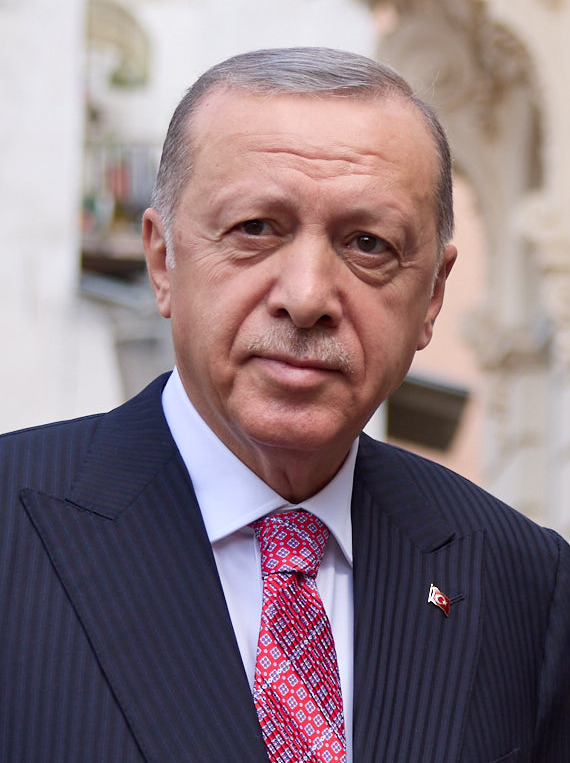
Political life in Turkey is characterized by marked polarization between supporters of President Recep Tayyip Erdogan and the governing alliance on the one hand, and a heterogeneous opposition on the other. Erdogan’s long tenure, the personalization of executive power in the presidential system (since 2018), and highly contentious electoral campaigns have contributed to a political environment where partisan and ideological cleavages frequently overlap with religious-secular, urban-rural, and ethnonational divisions. Elections continue to be competitive and high-turnout events, and recent local electoral outcomes have shown that the opposition can make significant gains. However, public debate is often framed in zero-sum terms, with mutual accusations of existential threat to the state or to core social values. This degree of polarization is substantial but falls short of systemic collapse, as institutional routines such as elections still function and peaceful transfers of local power have occurred.
Social Tensions and Identity Cleavages
Societal tensions are significant but uneven across regions and groups. Key cleavages involve secular versus religiously conservative constituencies, ethnic tensions involving the Kurdish question, attitudes toward large refugee populations (notably Syrians), and debates over gender roles and family policies. Erdogan and the ruling bloc often emphasize conservative, nationalist, and religiously informed narratives, which resonate with substantial segments of society but are perceived by others as exclusionary or restrictive. While these divides periodically generate protest episodes, localized clashes, and harsh rhetoric, they are not currently producing widespread, continuous violence on a national scale. Social coexistence in daily life continues, yet perceptions of cultural threat and marginalization among various communities are common and contribute to a sustained level of tension rather than routine low-level disagreement.
Trust in Institutions and Rule of Law
Trust in core state institutions is mixed and stratified along political and ideological lines. Supporters of Erdogan tend to express relatively high trust in the presidency, security apparatus, and religious institutions, while critics express concerns about judicial independence, checks and balances, and the impartiality of regulatory bodies and electoral administration. Since the 2016 coup attempt, large-scale purges, emergency-rule practices, and terrorism-related prosecutions have altered perceptions of institutional autonomy. Constitutional reforms consolidating executive power in the presidency have also fueled academic and civil society debates over the quality of democracy and rule of law. At the same time, state institutions continue to operate, organize elections, deliver basic services, and maintain order. The level of tension is therefore significant but not indicative of a complete breakdown of constitutional governance, even though international indices often classify Turkey as exhibiting democratic backsliding.