Economic and financial governance tensions
Switzerland’s economy is robust, with low unemployment and strong export sectors, but the financial system and questions of economic governance generate mild to moderate tensions. Housing affordability in some urban areas, concerns about wage pressure in cross-border regions, and debates on corporate taxation and sustainability are recurrent topics. The collapse of Credit Suisse and its emergency acquisition by UBS heightened anxieties over financial concentration, regulatory oversight, and the risks inherent in an outsized banking sector. As Finance Minister, KKS has been central in responding to these concerns: she has defended the rescue as a necessary step to avoid systemic crisis while supporting a tightening of too-big-to-fail regulations and clearer resolution mechanisms to reduce the likelihood of similar interventions. Critics—on both the left and parts of the right—argue that reforms are either too lenient or potentially harmful to competitiveness, and some direct-democracy initiatives and parliamentary debates target bonus cultures, capital requirements, and state guarantees. Tensions are therefore noticeable, especially around financial regulation and perceived fairness, but they are channeled through ordinary political and institutional processes, not through acute social unrest.
International relations and relations with the EU
Switzerland’s foreign policy environment is characterized by strategic caution, a strong preference for neutrality, and highly institutionalized economic interdependence, especially with the European Union. Relations with the EU have experienced periodic friction—most notably over an institutional framework agreement that failed in 2021 and subsequent negotiations over a new package—raising concerns in business and academic circles about long-term market access, research cooperation, and regulatory divergence. Tensions exist but are more technocratic than existential, and they manifest in slow, complex negotiation processes rather than open diplomatic conflict. KKS, though not Foreign Minister, plays a significant role from the finance side: she is involved in discussions on financial-market equivalence, tax coordination, and EU-related regulatory standards, and is generally associated with the economically liberal camp that favors stable, predictable arrangements with the EU to safeguard market access. Domestically, she sometimes intervenes in debates on neutrality, sanctions policy (e.g., alignment with EU sanctions on Russia), and international financial standards, arguing for a balance between autonomy and integration. Controversies over the perceived erosion of neutrality and the scope of international commitments are real but remain well below crisis levels, with broad elite consensus in favor of maintaining constructive, if carefully circumscribed, international engagement.
Migration, integration, and internal social debates
Migration and integration remain salient, if not crisis-level, themes in Swiss politics. Debates concern asylum procedures, the use of Schengen/Dublin mechanisms, labor-market impacts of EU and non-EU migration, and the cultural integration of newcomers. As head of the Justice and Police Department, KKS was a key actor in asylum and security policy and often communicated a firm but rule-based approach, emphasizing efficient procedures and enforcement while defending Switzerland’s international obligations. This position placed her at the intersection of competing pressures: the SVP and parts of the right criticized perceived leniency and loss of control, while NGOs, churches, and left parties sometimes denounced restrictive practices and detention or deportation policies. These debates can be emotionally charged at the level of media and campaigning, especially around specific incidents or referendums, but their overall intensity remains moderate, and they have not seriously threatened social peace. KKS’s stance and rhetoric—relatively restrained and legalistic—have tended to frame migration as a managerial and legal challenge rather than an existential cultural conflict, which contributes to keeping tensions below the threshold of broader polarization.
Political polarization and party competition
Party competition has sharpened somewhat in recent years, especially between the right-wing Swiss People’s Party (SVP/UDC) and green or social-democratic parties over migration, climate, and relations with the EU. Nonetheless, polarization remains modest by international standards: cross-party cooperation is built into the ‘magic formula’ system of multi-party government, and referendums encourage issue-by-issue coalitions that cut across ideological lines. KKS, a member of the centre-right FDP.The Liberals, has been associated with market-liberal and institutionally conservative positions and sometimes comes under criticism from both the populist right (for being too pragmatic on international commitments) and the left (for fiscal restraint and law-and-order stances). Yet she is generally viewed as a conventional establishment figure rather than a polarizing personality. Her role in managing contentious files—such as security, asylum/Schengen matters when she was Justice Minister, and later the Credit Suisse rescue as Finance Minister—has been contested in parliament and media but has not produced entrenched ideological camps around her person. In comparative terms, Switzerland’s polarization is visible but still low-intensity.
Social stability and overall cohesion
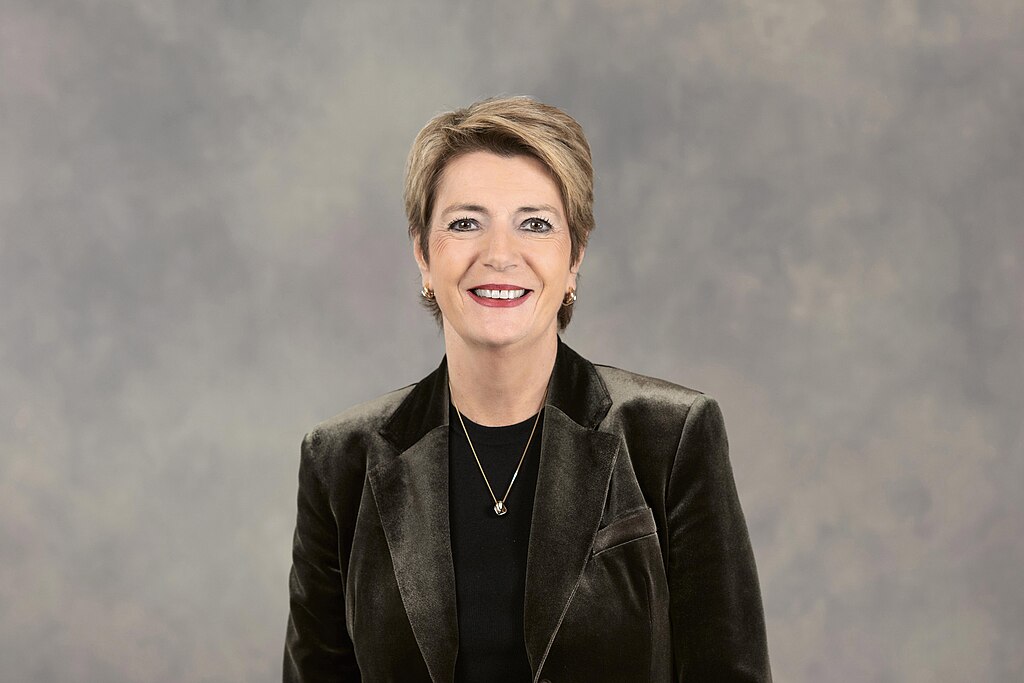
Switzerland remains one of Europe’s most socially stable democracies, with low levels of political violence, strong economic performance, and high living standards. Power-sharing between parties, linguistic regions, and cantons limits winner-takes-all dynamics and cushions social conflict. Karin Keller-Sutter (KKS), first as head of the Federal Department of Justice and Police and now as Federal Councillor for Finance, operates in and reinforces this consensus-oriented system: her public interventions emphasize fiscal prudence, institutional continuity, and incremental reform rather than disruptive change. Even during episodes of stress—such as the 2023 emergency takeover of Credit Suisse—social order was never in question and protests remained limited in size and intensity. Social debates exist (on EU relations, migration, climate policy, and financial regulation), but they occur within a broadly accepted constitutional and procedural framework, and KKS generally positions herself as a stabilizing, technocratic actor rather than a polarizing figure.
Trust in institutions and political elites
Public trust in Swiss institutions—federal government, courts, and direct-democratic mechanisms—remains relatively high, but there are points of mild to moderate strain. Episodes such as the pandemic response and, above all, the state-facilitated rescue of Credit Suisse in March 2023 have generated criticism of political elites and the perception of ‘too big to fail’ favoritism toward large financial actors. KKS was at the centre of this episode as Finance Minister, defending the rapid use of emergency powers and federal guarantees. While many actors accepted the intervention as necessary to protect the financial system, parliament subsequently scrutinized the process intensely, and some segments of the public and civil society argued that the decision-making was opaque and too favorable to bank management and shareholders. This has modestly eroded trust in the handling of financial governance, though not in the institutional order as a whole. KKS’s reputation as a competent, rules-oriented politician partly mitigates this, but she has also become a focal point in debates about the accountability of the Federal Council, the limits of emergency powers, and the relationship between democratic oversight and technocratic crisis management.