International Relations and Global Perceptions
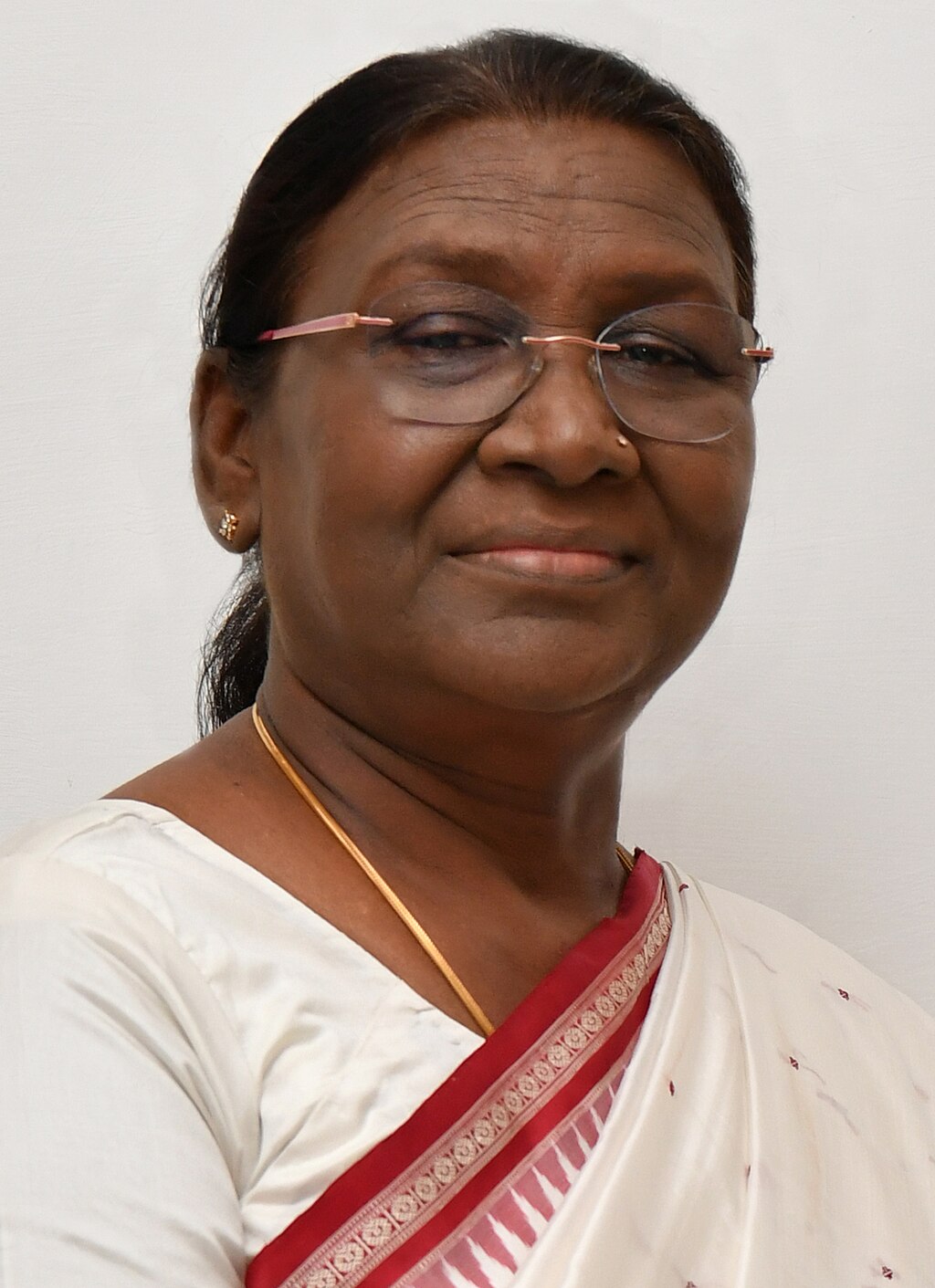
In international relations, India is generally perceived as a stable and influential regional and global actor, with active diplomacy in forums such as the G20, the Quad, BRICS, and the United Nations. External observers view India both as a key strategic partner in areas like economic growth, technology, and security, and as a complex democracy facing internal debates over rights, pluralism, and governance. Tensions with neighboring states, notably Pakistan and China, and periodic border incidents, persist but are managed without escalating into systemic war, while India’s global economic and diplomatic engagement continues to expand. Droupadi Murmu’s role in this sphere is largely ceremonial but symbolically significant. As head of state, she receives foreign dignitaries, undertakes select state visits, and represents India in a formal capacity, contributing to the projection of continuity, constitutional order, and diversity in external perceptions. International media and diplomatic commentary often highlight her as an emblem of India’s democratic inclusiveness, with particular reference to gender and indigenous representation. However, decisions on foreign and security policy remain firmly in the hands of the executive and diplomatic apparatus, meaning Murmu’s direct influence on substantive international policy is limited. Her presence thus reinforces a narrative of democratic legitimacy and social diversity at the symbolic level, while the overall tension level in India’s international environment remains relatively low and driven primarily by structural regional and great-power dynamics rather than by the presidency itself.
Media Environment and Public Discourse
India’s media environment is pluralistic yet highly contested. There is a wide spectrum of print, television, regional, and digital outlets, alongside a rapidly expanding social media ecosystem. At the same time, concerns about media concentration, political and corporate influence, pressures on critical journalism, and the proliferation of disinformation are prominent in academic and policy debates. Some observers characterize parts of mainstream broadcast media as strongly aligned with the government’s narratives, while others point to vibrant online and regional spaces that continue to host dissenting views. Legal and regulatory actions—such as defamation cases, tax or enforcement raids, or the use of information technology and security laws—are closely watched for their effects on media freedom. Within this landscape, Droupadi Murmu appears in public discourse primarily as a symbolic and unifying figure. Coverage often emphasizes her personal journey from a modest tribal background to the presidency, especially around ceremonial occasions such as Independence Day or Republic Day. Government-aligned narratives use her story to underscore themes of empowerment and inclusivity, while critical commentators sometimes contrast the symbolism of her office with conditions on the ground for tribal communities, women, or journalists. She is rarely a direct protagonist in media controversies, which helps preserve her image as above day-to-day partisan disputes. Nonetheless, how different media actors frame her identity and role feeds into broader debates over representation, narrative control, and the uses of symbolic politics in a polarized media sphere.
Political Polarization
India exhibits substantial political polarization along party, ideological, religious, and regional lines. The dominance of the Bharatiya Janata Party (BJP) at the national level, debates over majoritarian vs. pluralist visions of the republic, and contentious electoral campaigns contribute to a climate where political identities are often sharply drawn. Droupadi Murmu’s presidency has a complex position within this environment. Her election as India’s first tribal and second woman president has been framed by supporters as evidence of inclusive democratic representation and by critics as symbolically important but not necessarily altering underlying power asymmetries. In contentious policy debates—such as those concerning citizenship, federalism, or minority rights—the presidency has largely maintained a conventional, constitutionally limited role, avoiding overt partisan intervention. This has meant that while Murmu is invoked by different sides either as a symbol of social inclusion or as a figure whose authority should be respected in constitutional matters, she has not substantively reduced polarization. Instead, her presence functions more as a reference point in arguments about the inclusiveness and legitimacy of the current political order than as a mediator transforming the polarized landscape.
Social Stability and Public Order
Despite recurrent localized protests, sectarian incidents, and episodes of confrontation between protesters and security forces, India maintains overall social stability and functioning public order. State institutions continue to operate, elections are held regularly, economic and social life proceed without large-scale disruption across most of the territory, and there is no general breakdown of law and order. Protests—whether farmers’ mobilizations, student demonstrations, or regional agitations—have at times been intense but are typically episodic and geographically concentrated. Droupadi Murmu’s role in this domain is mainly as a constitutional head of state who reinforces narratives of continuity and stability. Her speeches often highlight democratic resilience, respect for constitutional procedures, and gradual social transformation through institutional channels. This reinforces a perception of a stable constitutional order even during periods of contentious politics. Her ascent from a modest social background to the presidency is used in official and public discourse as an illustration of the system’s capacity for mobility and reform, which can bolster a sense of long-term stability despite ongoing disputes. Nonetheless, underlying grievances relating to economic inequality, regional disparities, and social exclusion persist, sustaining a moderate level of structural tension beneath the relatively stable surface.
Social Tensions and Identity Politics
Social relations in India remain marked by significant but uneven tensions around religion, caste, ethnicity, class, and region. Episodes of communal violence, disputes over religious sites, contentious public rhetoric, and vigilante incidents related to issues such as cattle protection or interfaith relationships show that latent fault lines can become acute in certain locales or moments. Simultaneously, large parts of the country experience routine coexistence and everyday cooperation across community lines, which keeps overall social order from tipping into systemic crisis. Droupadi Murmu’s identity as a member of a marginalized Adivasi (tribal) community and as a woman has strong symbolic resonance in this context. Her elevation to the presidency is often cited domestically and internationally as a milestone in the inclusion of historically disadvantaged groups. Advocates of the current political leadership point to her position as evidence of upward mobility and recognition for tribal communities, while some critics argue that structural inequities and localized displacement or conflict in tribal areas continue despite this symbolic breakthrough. Murmu’s public addresses typically emphasize social harmony, constitutional values, and the uplift of marginalized communities, contributing to a discourse of inclusion and stability. However, because the presidency is largely ceremonial, her capacity to directly address or de-escalate specific social flashpoints is limited, and social tensions remain significantly present though not generalized into nationwide unrest.
Trust in Democratic and Legal Institutions
Trust in India’s democratic and legal institutions is mixed: relatively robust in terms of continued high electoral participation and acceptance of basic constitutional frameworks, but contested regarding institutional independence, civil liberties, and minority protections. The Election Commission, Supreme Court, and other oversight bodies remain significant actors, yet are frequently the subject of debate concerning perceived politicization, responsiveness, or effectiveness. Civil society organizations and segments of the opposition express concern about shrinking civic space, selective law enforcement, and the use of security and criminal laws against dissent, while supporters of the government highlight stability, developmental performance, and the rule of law. In this environment, the presidency serves as a symbol of constitutional continuity and neutrality. Droupadi Murmu’s conduct has so far adhered to established conventions, rarely departing from the advice of the elected government, which aligns with India’s parliamentary model but also prompts debate about how assertive a president should be in moments of contention (e.g., on controversial legislation or ordinances). Her background as a representative of a marginalized community is frequently invoked as legitimizing the constitutional order and suggesting that institutions can accommodate social diversity. At the same time, critics argue that symbolic inclusion does not fully offset concerns about institutional autonomy or rights protections. Overall, trust levels are neither at crisis nor at complacent stability: they reflect a working but contested democracy where institutions retain authority but face persistent scrutiny.